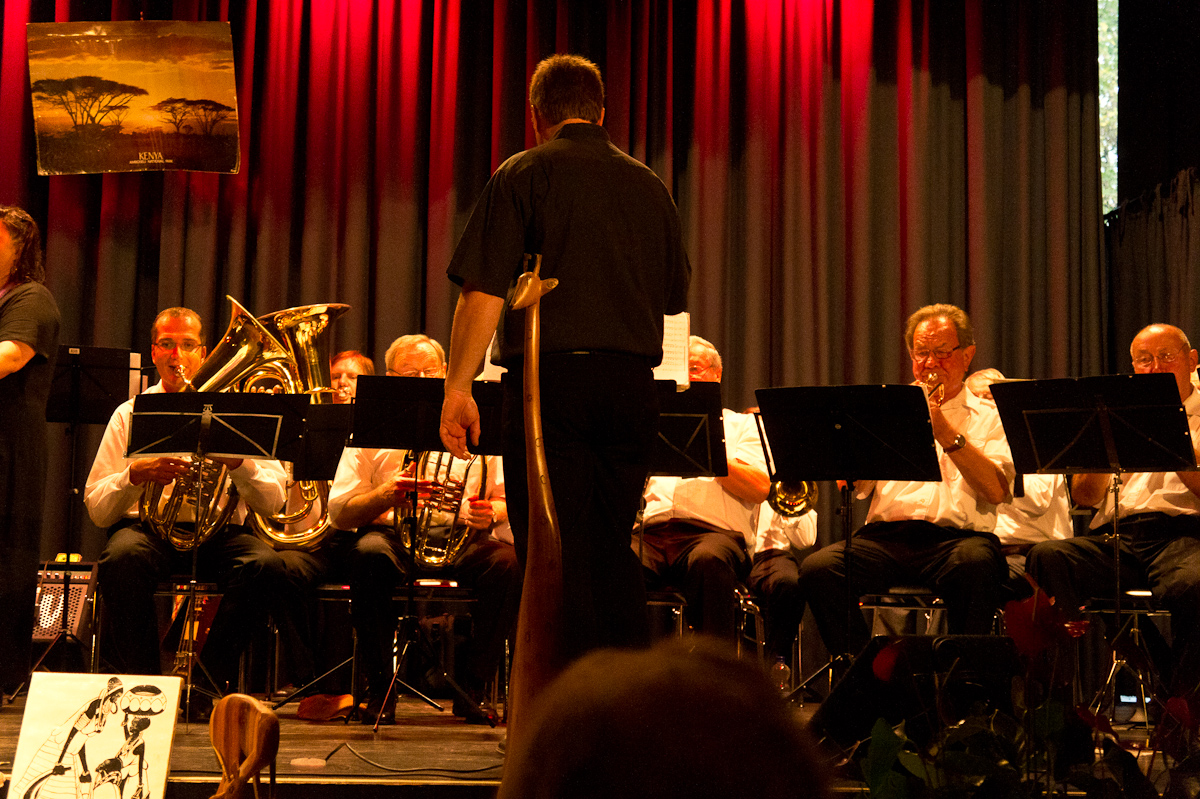
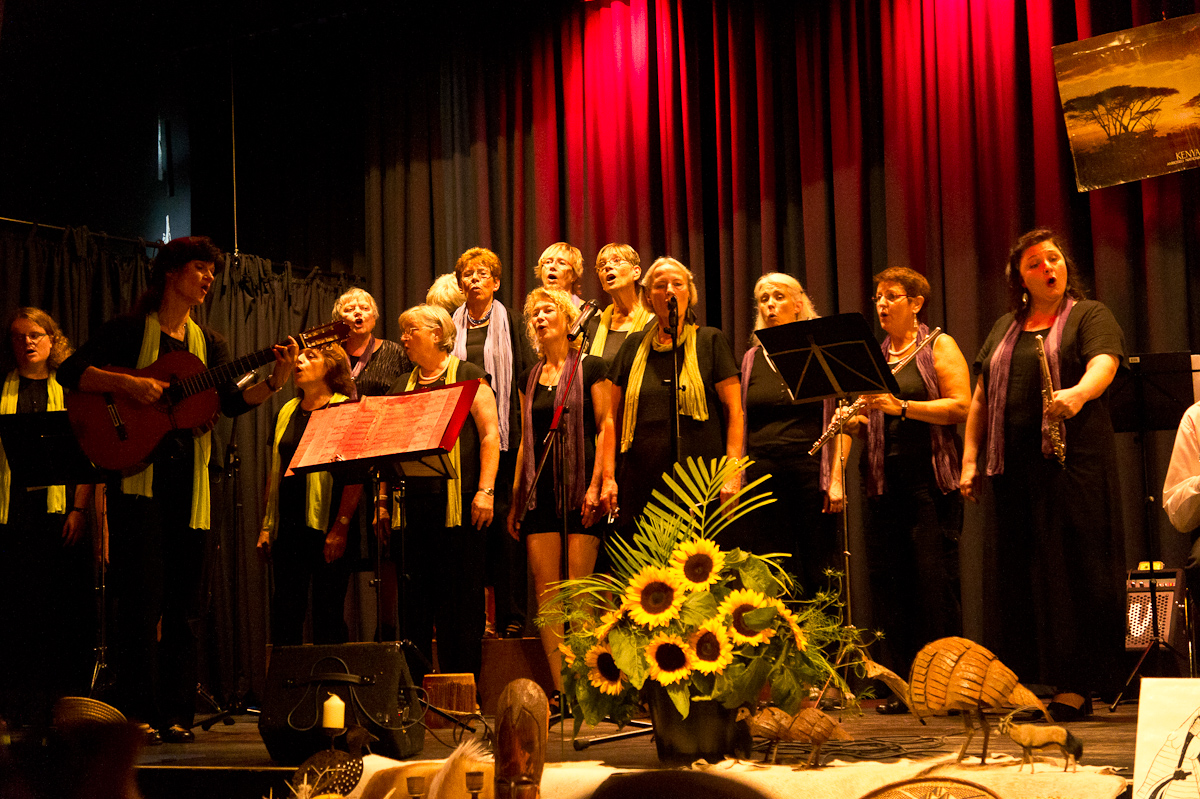
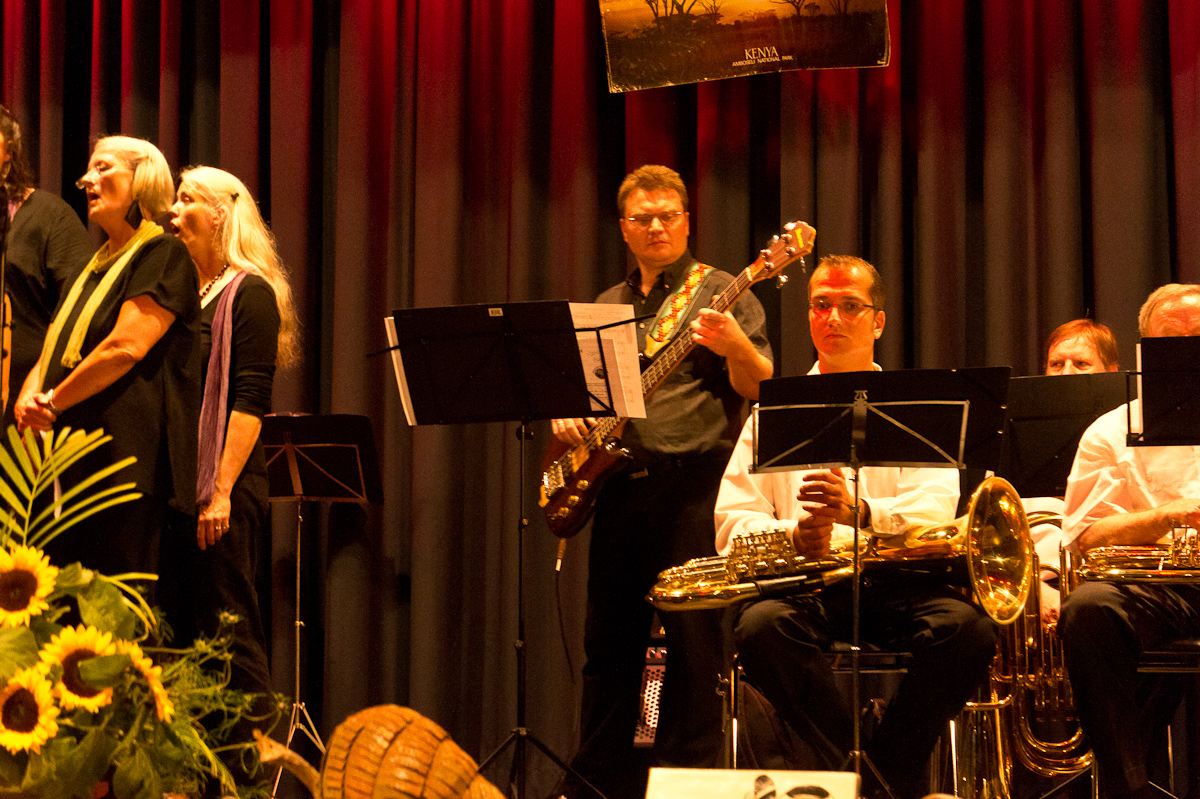
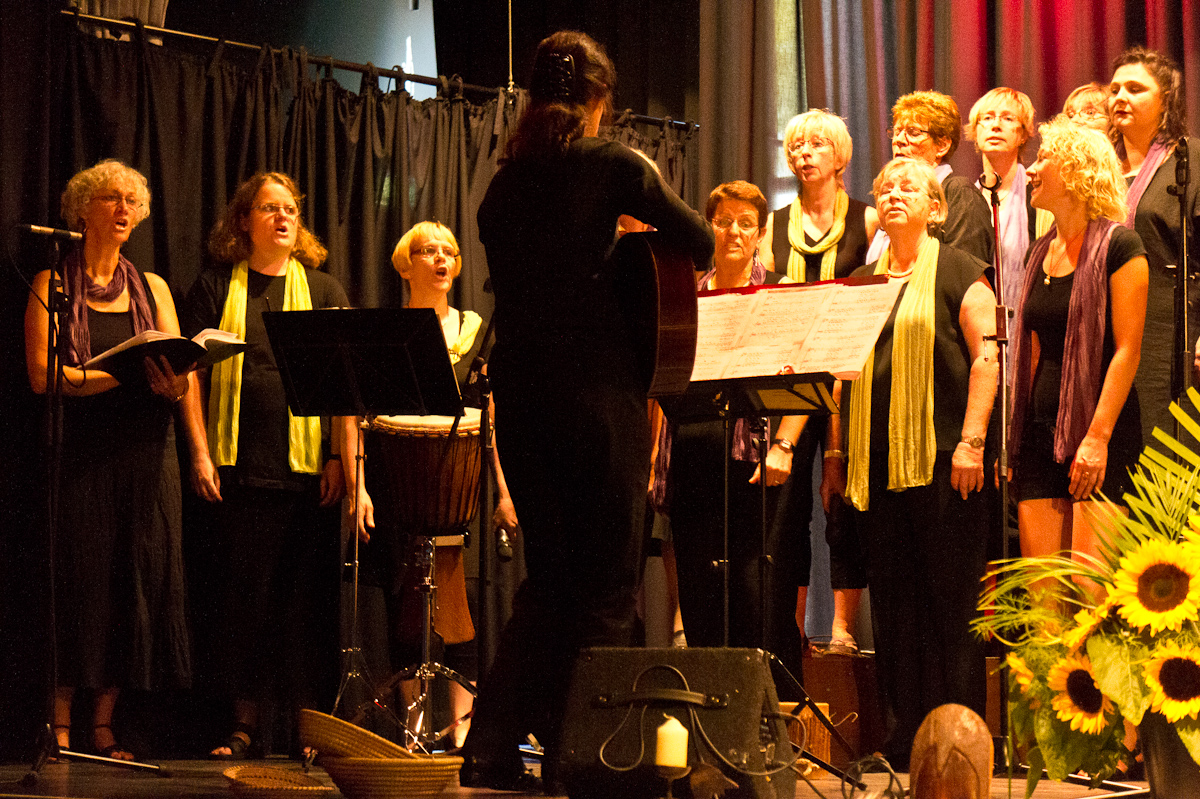
Today there was a concert by Millima Mabonde (Gospel choir from Nordwalde and Altenberge) and the brass group St. Sebastian from Nienberge. Since my sister sings in the Gospel choir, we were there again. It was a very beautiful concert, lots of fun.
The Olympus 45 1.8 Micro 4/3 Lens Review by Steve Huff. Okay, with Steve you always have to subtract some enthusiasm, but the 45/1.8 really sounds very exciting. The Micro 4/3 system is finally gaining momentum. Some of the latest lenses that have been announced and actually released are very interesting. The same goes for the Olympus 12/2.0 or the Panasonic 14-42 Powered Zoom (yes, yes, powered zoom sounds like a compact camera, but hey, the lens is extremely small and thus ideal for the GF1 for an always-with-you camera with a bit more flexibility than the 20mm). I'm still torn between the Sony E-Mount and the Micro 4/3 system, but in the end, it will come down to the lenses - what good is a system that is better in terms of the sensor if the lens selection is too limited. Sony is definitely releasing new bodies too quickly - and too slowly new lenses.
Today’s belief in ineluctable certainty is the true innovation-killer of our age. In this environment, the best an audacious manager can do is to develop small improvements to existing systems—climbing the hill, as it were, toward a local maximum, trimming fat, eking out the occasional tiny innovation—like city planners painting bicycle lanes on the streets as a gesture toward solving our energy problems. Any strategy that involves crossing a valley—accepting short-term losses to reach a higher hill in the distance—will soon be brought to a halt by the demands of a system that celebrates short-term gains and tolerates stagnation, but condemns anything else as failure. In short, a world where big stuff can never get done. via Innovation Starvation - Neal Stephenson at World Policy Institute.
My profile on my own Diaspora pod - if anyone is also there, just add gb@pod.rfc1437.de as an aspect. It's running quite smoothly now and therefore it's now so to speak semi-official. Not that there's much going on there yet, but maybe one or the other reader here also hangs out on a Diaspora pod. It's the little details that interest me about Diaspora - of course also the big things like cost efficiency and distributed architecture, but when you see for example that the profile naturally has an RSS feed as standard, that's already nice. Or that Markdown is simply offered as formatting. And since the last iterations, the mobile interface is also quite nice. No app, but at least an iOS adapted surface. And well, the distributed installation - Diaspora is a bit like OpenSim in that way. And that's at least quite interesting as a toy. BTW: personally known readers can write to me for an invite if they want to play around with it. Sorry, no open pod, but I currently have no desire for the automatic hassle that results from public systems.