The Ingredients:
- Canon EOS 10D
- Canon to Contax MM bayonet adapter
- Retro adapter for Contax MM bayonet
- Filter adapter from 52mm to Series VII
- Filter adapter from Series VII to 67mm
- Tokina RSX 17mm/3.5 wide-angle lens
- a Manfrotto 352RC ball head
- a Manfrotto 055SB tripod
- the camera's self-timer
The image field is then approximately 6 x 4 millimeters. In the image, a spine attachment of a cactus. And you can also photograph a cactus mite with it. The main problem is focusing: since I don't have a focusing rail, the cactus and equipment had to be moved. Image field selection via the ball head, rough focusing also via the ball head, fine focusing by carefully moving the subject. That's why the cactus mite isn't perfectly sharp either - for that you really do need the focusing rail.
microlen.htm - Discussions about macro photography lenses
Oh man, now there's already something like dialers for cell phones. And it's being built in right from the sale. Rip-offs everywhere. Of course Vodafone is leading the way - yes, exactly, the ones with the million-dollar severance packages for managers who just got a tax gift after fraudulent stock price manipulation ...
At NETZEITUNG.DE Internet I found the original article.
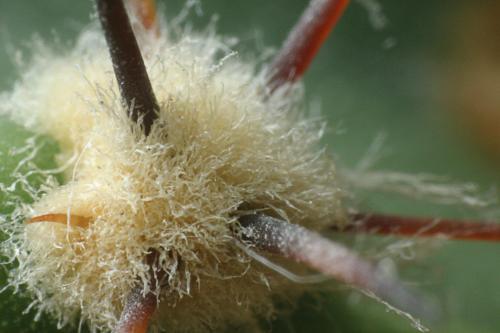
Photographed with the EOS 10D, a Contax adapter, a Contax reversal ring and the Tokina 17/3.5 in reverse position at aperture 16 and 3/4 second with subsequent exposure correction of the RAW file by 1.5 stops.
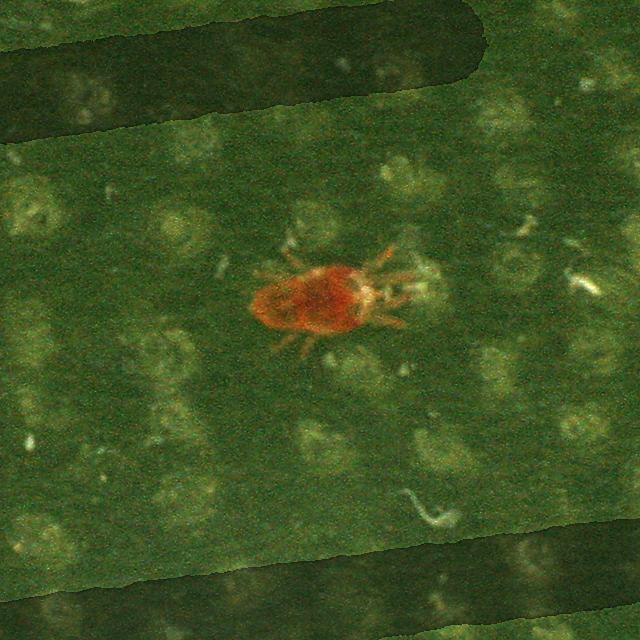
For size comparison: the distance between the centers of the two darker bars is one millimeter! The image is not optimally sharp, as I had to capture the whole thing relatively primitively - for example, at the time of shooting I didn't have a macro focusing stage for focus adjustment, but had to do it manually. Still, it's impressive what kind of images you can get with relatively little effort.